In the pharmaceutical, cosmetic, and medical device industries, the safety and quality of the final product depend heavily on strict microbiological control. Consequently, a key concept is Bioburden (or microbial load), the presence of viable microorganisms on or within a product.
Understanding what bioburden is and how to accurately quantify it through TAMC/TYMC, and Bioburden tests is essential for ensuring that every batch complies with international regulatory standards (such as Ph. Eur., USP, and JP Pharmacopeias).
What is Bioburden?
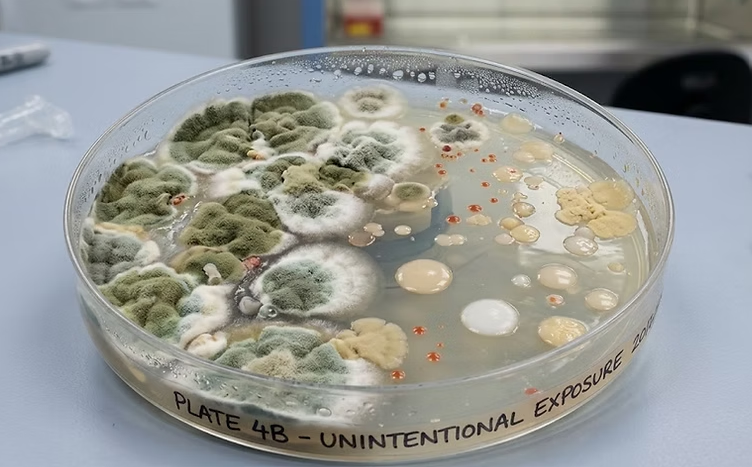
Bioburden refers to the total population of viable microorganisms (bacteria, yeasts, and molds) present on a surface, in a liquid, within raw materials, or inside a finished product prior to any sterilization or preservation process.
Routine monitoring of Bioburden is necessary to:
- Ensure consumer safety: prevent infections or adverse reactions caused by opportunistic or pathogenic microbes.
- Preserve product stability: prevent bacteria or fungi from degrading active ingredients, breaking down emulsions, or altering product pH, color, and odor.
- Validate sterilization processes: for sterile medical devices or pharmaceuticals, determining the initial Bioburden is mandatory to calculate the required sterilization dose or cycle efficiency (e.g., ethylene oxide, gamma radiation or moist heat).
TAMC and TYMC: Total Microbial Count
For non-sterile pharmaceuticals and cosmetic products, microbial quality testing relies on two main quantitative parameters defined in the harmonized pharmacopeial chapters (USP <61> / Ph. Eur. 2.6.12):
1. TAMC (Total Aerobic Microbial Count)
TAMC measures the total concentration of aerobic bacteria in the sample.
- Culture Media: Soybean-Casein Digest Agar (TSA).
- Incubation Conditions: 30 °C - 35 °C for 3 - 5 days.
2. TYMC (Total Combined Yeasts and Molds Count)
TYMC measures the total concentration of fungi (yeasts and molds).
- Culture Media: Sabouraud Dextrose Agar (SDA).
- Incubation Conditions: 20 °C - 25 °C for 5 - 7 days.
Results for both assays are expressed in CFU/g (Colony Forming Units per gram) or CFU/mL (Colony Forming Units per mililiter) for liquid formulations.
The Bioburden Test for Medical Devices
While TAMC and TYMC primarily apply to non-sterile pharmaceuticals and personal care products, the term Bioburden Test specifically refers to estimating the microbial population on medical devices, components, or packaging prior to terminal sterilization (according to ISO 11737-1).
The primary technical challenge in medical device bioburden testing is microbial recovery: microorganisms must be detached from the device surface (e.g., via sonication, mechanical shaking, or flushing) before being plated on agar and incubated.
Test Execution: Key Analytical Steps
-
Sample Preparation and Neutralization
The sample is dissolved or suspended in a sterile diluent (e.g., Phosphate Buffer pH 7.2). If the product contains preservatives or antimicrobial substances, neutralizers (such as polysorbate 80 or lecithin) must be added to prevent false-negative results.
-
Inoculation and Plating Method
- Membrane Filtration: Ideal for filterable liquids. The sample passes through a 0.45µm membrane filter that retains microbes, which is then placed directly onto the agar medium.
- Pour Plate Method: The diluted sample is mixed directly with molten agar cooled to approximately 45°C.
- Spread Plate Method: The sample volume is spread evenly over the surface of a pre-solidified agar plate.
-
Incubation
Plates assigned for TAMC and TYMC are placed in designated incubators for the required duration and temperature ranges.
-
Enumeration and Result Calculation
Visible colonies are counted manually or using an automated colony counter. The mean count across replicate plates is multiplied by the dilution factor to determine the final value in CFU/g, CFU/mL, or CFU/device.